-
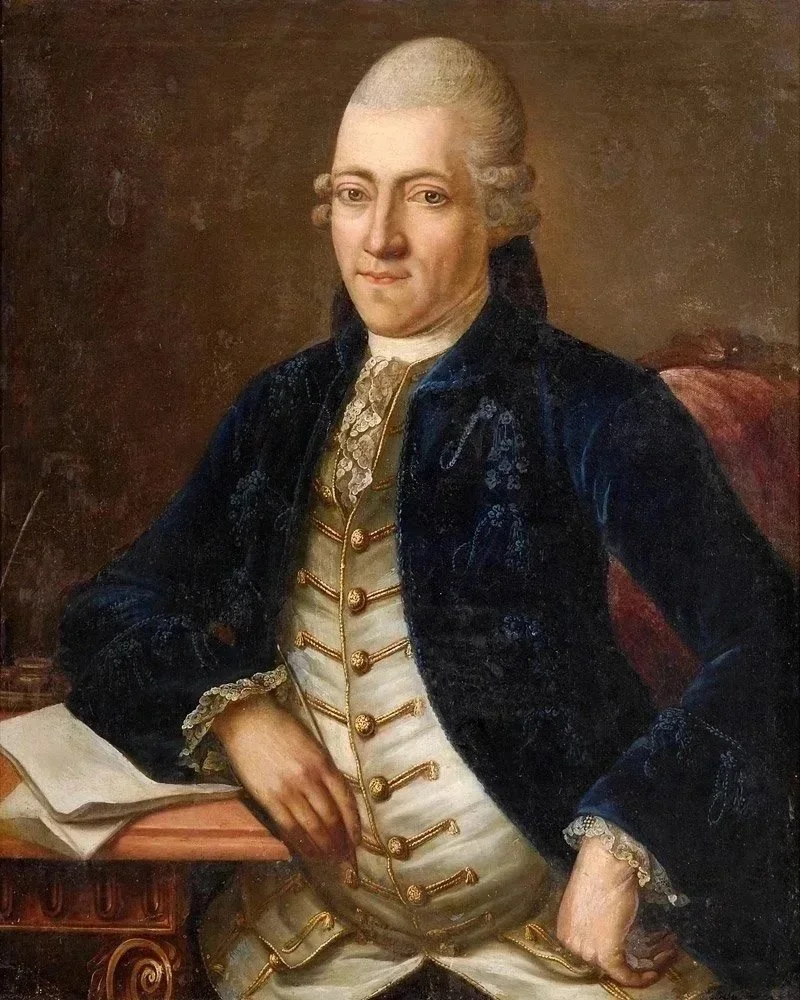
Johann Casper Enslin
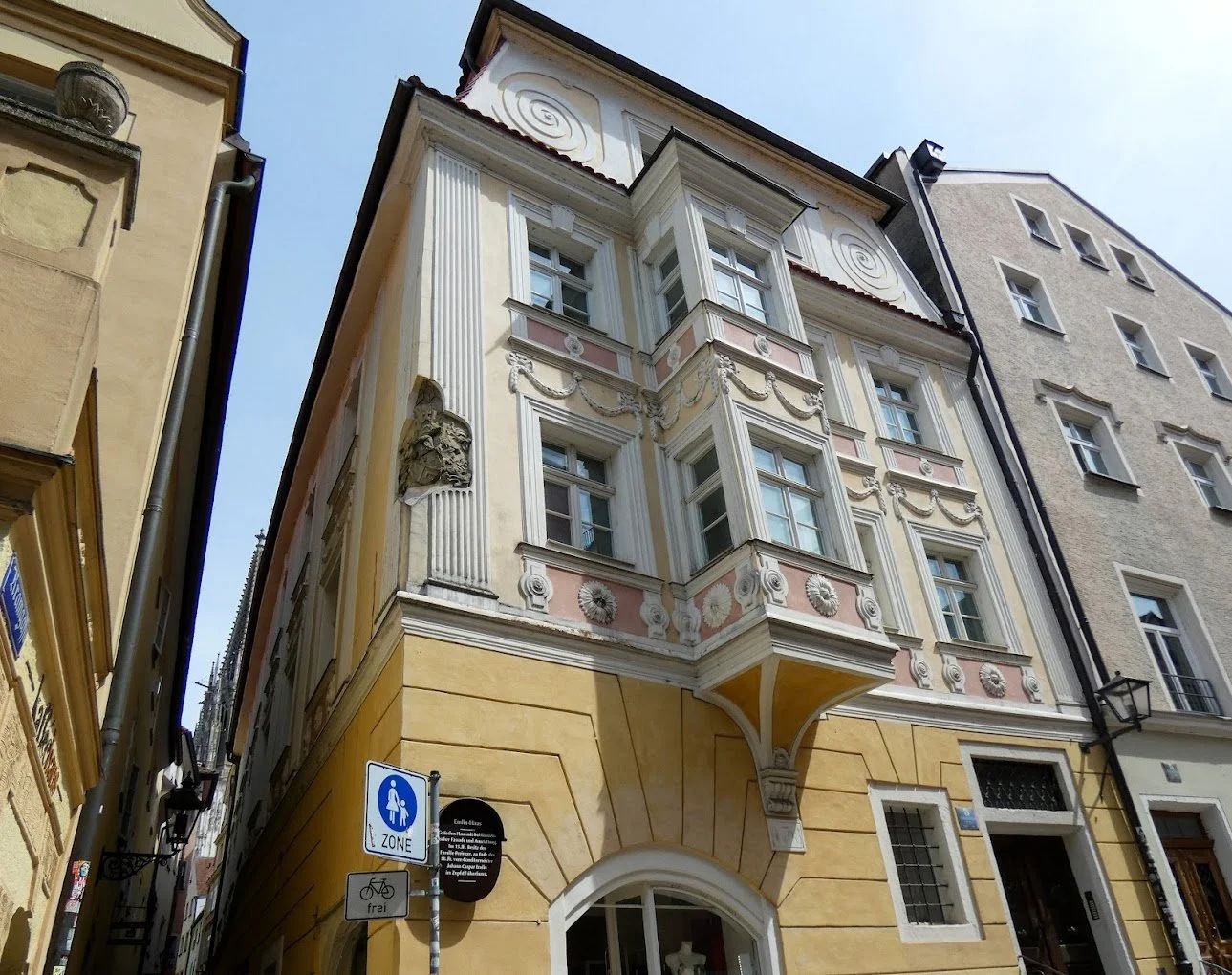
Enslin Hause - Regensburg, Germany
-
Maria Juditha Enslin
Enslin Haus - Regensburg, Germany

ENSLIN LEGACY



It began long before stones formed walls or staircases echoed footsteps before murmurs drifted through corridors lit only by candlelight. The story of The Enslin House had no blueprint—it was dreamt into being, carved gently by hands unseen, and whispered into the ears of those who knew how to listen.
In the late 1300s, in the winding streets of Nördlingen, Germany, a name arose—not spoken loudly but whispered like an incantation: Enslin. The lineage held something rare, something ancient: the ability to see beyond surfaces, into the soul of things, weaving visions into bloodlines.
But the Enslins were never destined to remain rooted in a single soil.
In Regensburg, Bavaria, centuries later, another Enslin rose— Johann Caspar Enslin, a man whose hands knew spice, sugar, and secrets of transformation. He reimagined his home, once a Gothic memory, into an opulent dream: the Zopfstil, a fusion of Late Rococo's flourish and neoclassical grace. Pillars spoke strength, rosettes bloomed with promise, and the family's coat of arms etched itself into stone, anchoring history to hearth and heart.
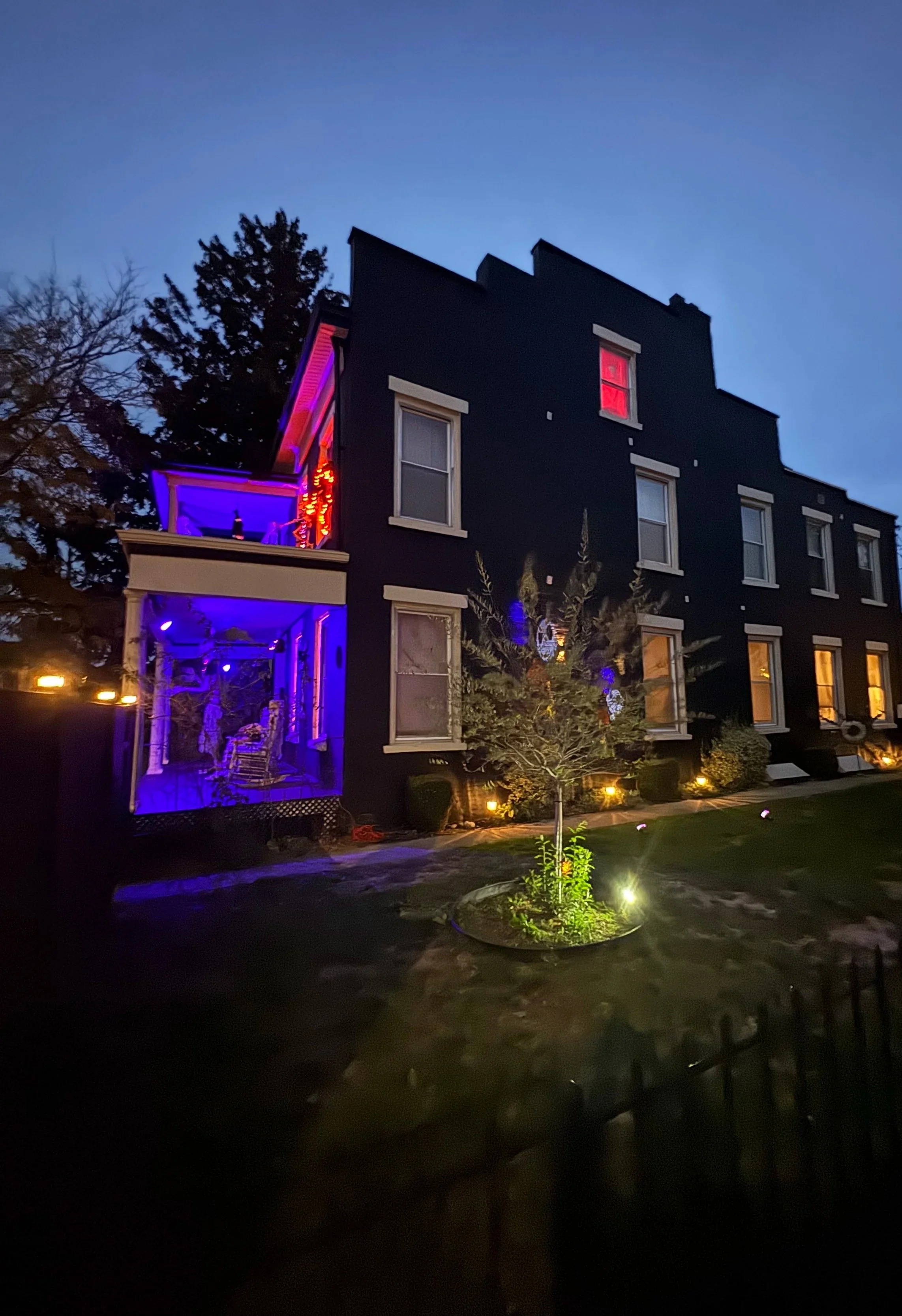
Across oceans, another home stirred, called forth by the same unseen hands—a twin, bound not by geography but by spirit, in the heart of Lansingburgh, New York. Two houses now stood, mirrors separated by waves, joined forever by something deeper than blood or birthright: by vision, by longing, by the silent, powerful language of lineage.
In 2014, the Enslin House in New York spoke again, calling clearly to the one born of its bloodline—not through words, but through a quiet, irresistible pull toward home. Leaving the life she'd woven in Bronxville behind, she returned as guardian, keeper, storyteller, and empath. Her feet touched floors worn smooth by generations before her; her fingertips traced walls that held memories both joyful and tragic. She didn't simply inhabit this place; she embodied it.
She became a living thread in a tapestry older than memory itself—an award-winning writer, seer, and healer whose task was not ownership, but guardianship. For The Enslin House belongs to no one. It chooses who will speak its truths and guard its mysteries.
And now, it waits patiently—not for just anyone, but for the next soul worthy of safeguarding its history, honoring its mysteries, and stewarding its legacy into a future still waiting to be revealed.
Protected. Watched over. Eternal.

TIMELESS
Some legacies spill forth in ink and parchment; others lie deeper, threaded into the fabric of souls, etched onto spirits, kept alive by breath and belief.
The Enslin lineage did not simply endure through centuries—it transformed them.
From the medieval streets of Nördlingen to Johann Caspar Enslin’s refined Bavarian masterpiece, and eventually across oceans to New York, this bloodline carried more than heritage—it carried vision, alchemy, and an innate sensitivity to worlds unseen.
This is a house inhabited—yes, haunted—but not by spectacle or cliché. The energies here do not rattle chains or beg for fear—they guard what is sacred. They witness. They remember. They choose who may enter their truth.
Generations of the Enslin women spoke softly of the apparitions they knew intimately. MiMi recalls stories whispered at midnight, when her grandmother, Mary, would speak of gentle murmurs in the sewing room, footsteps pacing halls once empty, a scent of perfume belonging to no one present—yet deeply familiar. a scent of perfume belonging to no one present—yet deeply familiar. The unseen was never an intrusion in this home. It was kin.
Even as a child, MiMi knew stillness in a way few souls ever will. Where others feared silence, she listened to it. She read rooms without words. She could feel time breathe. Energy spoke to her long before language could. She said nothing of it—not out of fear, but because it was natural. A river does not announce its flow. A star does not explain its light.
Not everyone understood. The small-minded rarely do. The spiritually starved, threatened by what they cannot name, mistook her stillness for strangeness and her certainty for arrogance. They mocked what they could not measure. But noise cannot touch a sovereign spirit. Energy beneath her has never held power over her. Those who walk without depth cannot understand those who were born with it.
The truth is, she never belonged to the shallow architecture of ordinary life. She belonged to what moves beneath it.
On the night of October 16th, 2005, everything changed. MiMi’s mother, Barbara Ann, returned to her home in Upstate NY after three days in hospice vigil with MiMi and her son Nicholas in Tuckahoe, NY. The moment she entered the house, dread gathered like a storm. The basement door—always kept closed—stood open.
The basement door—always kept firmly closed—stood open.
When she looked down the stairs, time shattered. Shirley—a longtime resident of the home—lay at the bottom, twisted, broken, violently pushed to her death. She had not fallen; her body told the story. Whether human hands acted alone remains a question. The police filed it quickly. Too quickly. No follow-up. No justice. No truth pursued.
Justice does not sleep forever—it waits.
Two months later, on December 29, 2005, MiMi’s only son, Nicholas Frederick, crossed into spirit—but never left her side. His presence has remained a guiding force, a quiet power felt in every room he once graced.
In 2014, MiMi returned to The Enslin House—not alone, but with Renzo at her side and her son Nicholas present in spirit—to care for her mother through her final season of life. Loss came again in 2017 when her brother, Michael Jude, took his own life under mysterious weight, another fracture in a bloodline already acquainted with sorrow. She stayed, unbroken, until Barbara Ann drew her last breath in 2020. Yet her return home was never simply an act of duty—it was spiritual inheritance.
Because Shirley was not the first soul bound to this house by unfinished truth.
The basement has always been more than stone and earth—it is a threshold. On August 22, 1935, MiMi’s great-grandmother, Anna, died in that very basement after stepping on a nail while gathering coal—three days before Barbara Ann was born. On January 8, 1936, just months later, Frederick Anthony died in the same basement while gathering coal for heat, his body discovered by his own son. Two deaths in the same place. Two lives lost while feeding the home fire. The tragedies were not accidents—they were warnings. The house remembers what the world chooses to forget.
This is not a haunted house story.
This is a house of memory.
A house of truth.
A house that refuses to bury what the living ignore.
Today, in the attic known as the Artist’s Loft, MiMi listens— with reverence. The house does not haunt her. It confides in her. She is a seer, an award-winning creative, and the keeper of a legacy that does not flinch in the face of truth. Here, past and present do not divide—they braid. Spirit does not wander—it participates. Creation is not performance—it is ceremony.
Artists feel it. Filmmakers sense it. Seekers arrive without knowing why. They stand in the doorway and whisper the same thing:
“I’ve been here before.”
The Enslin House does not chase attention—it calls only those meant to find it. It is not a spectacle. It is a living archive, a keeper of unfinished stories, a cathedral of ancestral fire.
And now it waits—not for believers, but for witnesses.
Some places defy the ordinary flow of time. Some places transcend the boundaries of the living and the dead.
The Enslin House is one of them.
